Mochitlan (RGTyM17)
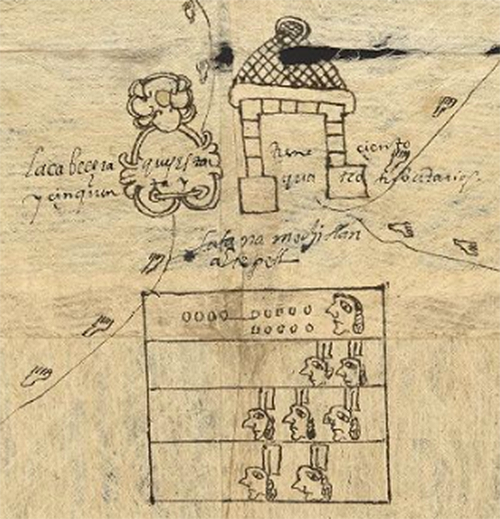
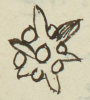
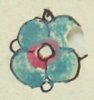
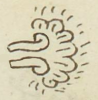
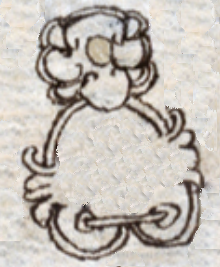
This is a drawing--partially painted--of the compound glyph for the place name Mochitlan (perhaps, "Place of the Thorny Medicinal Tree"). The glyph shows a visual but silent locative in the form of a hill or mountain (tepetl). On top of this hill is a quincunx shaped flower, something like the matlalin (below), but probably intending the flower that grows on the cuamochitl tree ("guamuchil").
Stephanie Wood
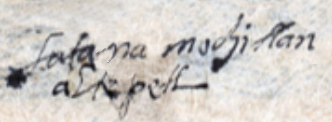
satana mochitlan
altepetl
Santa Ana Mochitlan, altepetl
1582
Jeff Haskett-Wood
plants, flowers, plantas, flores, nombres de lugares, topónimos, estancias, pueblos, nombres de lugares
cuamochi(tl), a thorny tree with medicinal leaves, https://nahuatl.wired-humanities.org/content/cuamochitl
-tlan, place of or near, https://nahuatl.wired-humanities.org/content/tlan
"Place of the 'Mochil'," Barbara E. Mundy, The Mapping of New Spain (1996, 147).
The source of these hieroglyphs is a manuscript and map known collectively as the “Relación de Tistla y Muchitlan,” also known as the “Descripción de la Alcaldia Mayor de las Minas de Zumpango.” Apparently, these towns (today spelled Tixtla and Mochitlan) are in the modern-day state of Guerrero, but they fell under the religious jurisdiction of the Diocese of Tlaxcala. Thanks go to Octavio Márquez for his contribution of the glyph, gloss, and contextualizing images.
The original manuscript is hosted on line as part of the Benson Latin American Collection, The General Libraries, University of Texas at Austin, https://collections.lib.utexas.edu/catalog/utblac:fbc92b3e-bb28-4258-975.... It is open-access.