Nenca (MH896v)
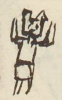
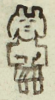
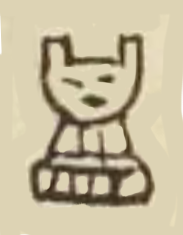
This black-line drawing of the simplex glyph for the personal name Nenca (“Idle”) is attested here as a woman’s name. The glyph seemingly shows a statuette of a divine force (nenetl), which serves a phonetic indicator for Nenca (“Idle”).
Stephanie Wood
Compare the simple “Nenca” glyph here with the “Nencacihuatl” glyph from this same page (MH896v); this one looks much more like a stone carving of a divine force, and the other one is either a doll or a woman. The idleness associated with nenca derives from the nemontemi (the five extra or “useless” days in the religious divinatory calendar, the tonalpohualli.) The negativity associated with uselessness and its application more to women or female divine forces than to male, may suggest a Nahua prejudice about women, according to Keiko Yoneda. See: Los Mapas de Cuauhtinchan y la historia cartográfica prehispánica (1991), 140.
Stephanie Wood
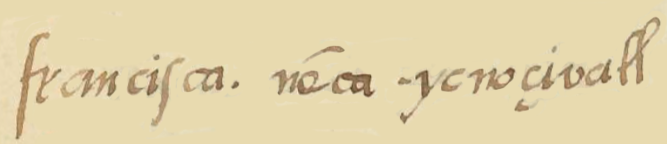
francisca . nēca - ycnocivatl
Francisca Nenca, icnocihuatl
Stephanie Wood
1560
Jeff Haskett-Wood
muñecas, figurillas de fuerzas divinas, nombres de mujeres, fonetismo, women's names
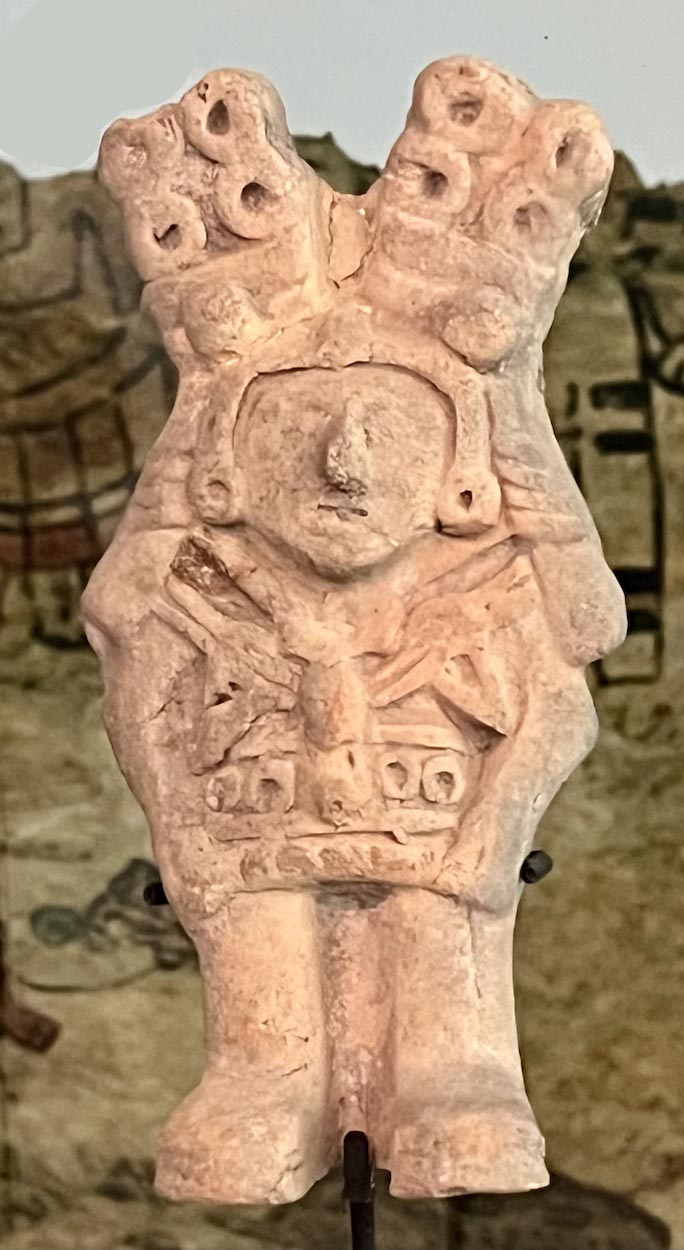
This diminutive female figurine might be what Nahuas would have called a nenetl, especially given the two shapes that protrude from the top of her head, which might represent the neaxtlahualli hairstyle, but often seem more rectangular. What these shapes are is unclear. Perhaps the neaxtlahualli hairstyle is harkening back to something worn on women’s heads in ancestral times. Museo de la Zona Arqueológica Tlatelolco. Photograph by Stephanie Wood, 2 May 2025.
nenca, idle, without profit, https://nahuatl.wired-humanities.org/content/nenca
nene(tl), deity image, doll, or female genitals, https://nahuatl.wired-humanities.org/content/nenetl
nencihuatl, a woman born during nemontemi (five extra calendar days, a time of uselessness), https://nahuatl.wired-humanities.org/content/nencihuatl
Osiosa
Stephanie Wood
Matrícula de Huexotzinco, folio 896v, World Digital Library, https://www.loc.gov/resource/gdcwdl.wdl_15282/?sp=865&st=image.
This manuscript is hosted by the Library of Congress and the World Digital Library; used here with the Creative Commons, “Attribution-NonCommercial-ShareAlike 3.0 License” (CC-BY-NC-SAq 3.0).