Quetzalcoyotl (Verg40v)
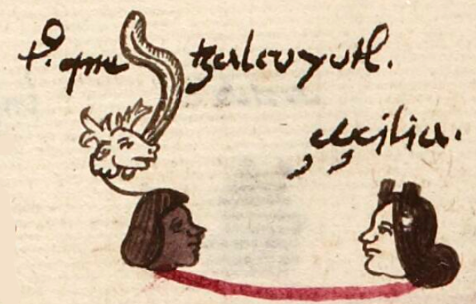
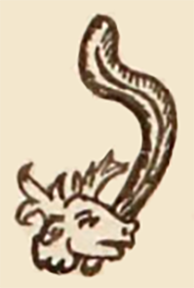
This compound Nahuatl hieroglyph is a black-line drawing of the personal name Quetzalcoyotl (“Quetzal Feather-Coyote”), which is attested here as a man’s name. It shows a vertical, curving quetzal feather (quetzalli), and below that, the head of what is supposed to be a coyote (coyotl) in profile, facing right. This animal has what appear to be horns or antlers, which are not appropriate for a coyote. But the gloss makes it clear that coyotl is the intention. A very similar Quetzalcoyotl glyph with the same gloss appears in this same manuscript on folio 46 recto, and that coyote also has antlers.
Stephanie Wood
The importance of quetzalli feathers in Nahua culture is evident in the number of records that start with or contain -quetzal- as a part of a given personal name (such as Quetzalcoatl, which is also the name of a divine force) or a place name. But this is the first “Quetzal-Feather Coyote” name to enter this digital collection. It is not even clear what the cultural expression of this name would be–perhaps dance regalia? It was common to dance with feathers. Perhaps a coyote head or skin would have been decorated with quetzal feathers.
Stephanie Wood
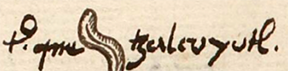
to. quetzalcoyotl.
Toribio Quetzalcoyotl
Stephanie Wood
1539
Jeff Haskett-Wood
nombres de hombres, men’s names, animales, coyotes, pluma, plumas, bailar, traje de baile
quetzal(li), a Quetzal feather, https://nahuatl.wired-humanities.org/content/quetzalli
coyo(tl), coyote, https://nahuatl.wired-humanities.org/content/coyotl
posiblemente, Coyote de Plumas de Quetzal
Stephanie Wood
Available at Codex Vergara, folio 40v, https://gallica.bnf.fr/ark:/12148/btv1b84528032/f88.item.zoom, accessed 14 March 2026 The Vergara is associated with Tepetlaoztoc, in the larger region of Tetzcoco, c. 1539–1543. “Source gallica.bnf.fr / BnF.” We would also appreciate a citation to the Visual Lexicon of Aztec Hieroglyphs, https://aztecglyphs.wired-humanities.org/.
Image Rights: The non-commercial reuse of images from the Bibliothèque nationale de France is free as long as the user is in compliance with the legislation in force and provides the citation: “Source gallica.bnf.fr / Bibliothèque nationale de France” or “Source gallica.bnf.fr / BnF.” We would also appreciate a citation to the Visual Lexicon of Aztec Hieroglyphs, https://aztecglyphs.wired-humanities.org/