Tlatolmitl (Verg49r)
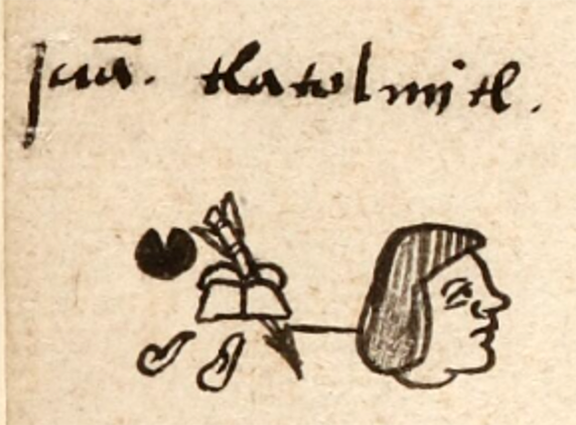
This compound Nahuatl hieroglyph is a black-line drawing of the personal name Tlatolmitl (perhaps “Word-Arrow”), attested here as a man’s name. The first part of this compound is presented semantically with two speech scrolls at the bottom of the glyph. This reading is complemented with two front teeth (tlantli) and some gums, which provide the phonetic tla- syllable. The other phonetic complement to the second part of tlatol- is the partial rubber ball (olli), giving the syllable -ol. The ball has a piece missing presumably to prevent the reading of etl (black bean). Finally, the -mitl (arrow) suffix to the name is given semantically as an actual arrow that pierces one of the teeth. A similar compound for this same name appears on folio 56 recto.
Stephanie Wood
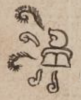
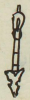
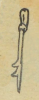
This is the first example of hieroglyph for the name Tlatolmitl to enter this digital collection (as of April 2026). One wonders whether this name reflects some kind of language that can be hurtful, harmful, and piercing. The elements are clear. Some comparisons of tlatolli and mitl glyphs appear below.
Stephanie Wood
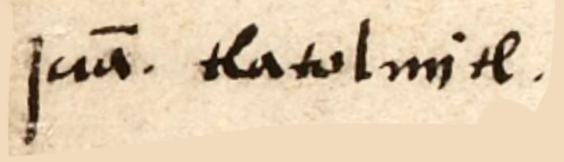
juā. tlatolmitl.
Juan Tlatolmitl
Stephanie Wood
1539
Jeff Haskett-Wood
volutes, dientes, flechas, palabras, lenguaje, idioma, hule, pelota, pelotas, nombres de hombres, men’s names, fonetismo

tlatol(li), word, language, discourse, speech, https://nahuatl.wired-humanities.org/content/tlatolli
mi(tl), arrow or dart, https://nahuatl.wired-humanities.org/content/mitl
posiblemente, Palabra-Flecha
Stephanie Wood
Available at Codex Vergara, folio 49r, https://gallica.bnf.fr/ark:/12148/btv1b84528032/f105.item.zoom, accessed 25 March 2026 The Vergara is associated with Tepetlaoztoc, in the larger region of Tetzcoco, c. 1539–1543. “Source gallica.bnf.fr / BnF.” We would also appreciate a citation to the Visual Lexicon of Aztec Hieroglyphs, https://aztecglyphs.wired-humanities.org/.
Image Rights: The non-commercial reuse of images from the Bibliothèque nationale de France is free as long as the user is in compliance with the legislation in force and provides the citation: “Source gallica.bnf.fr / Bibliothèque nationale de France” or “Source gallica.bnf.fr / BnF.” We would also appreciate a citation to the Visual Lexicon of Aztec Hieroglyphs, https://aztecglyphs.wired-humanities.org/