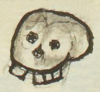
Tzonteconapan (LTlax303r)
This is a black-line drawing of the compound glyph for the place name, Tzonteconapan ("In The Skull Canal").
Stephanie Wood

c. 1580s
Jeff Haskett-Wood
cráneos, la muerte, agua, tzontecomatl, nombres de lugares
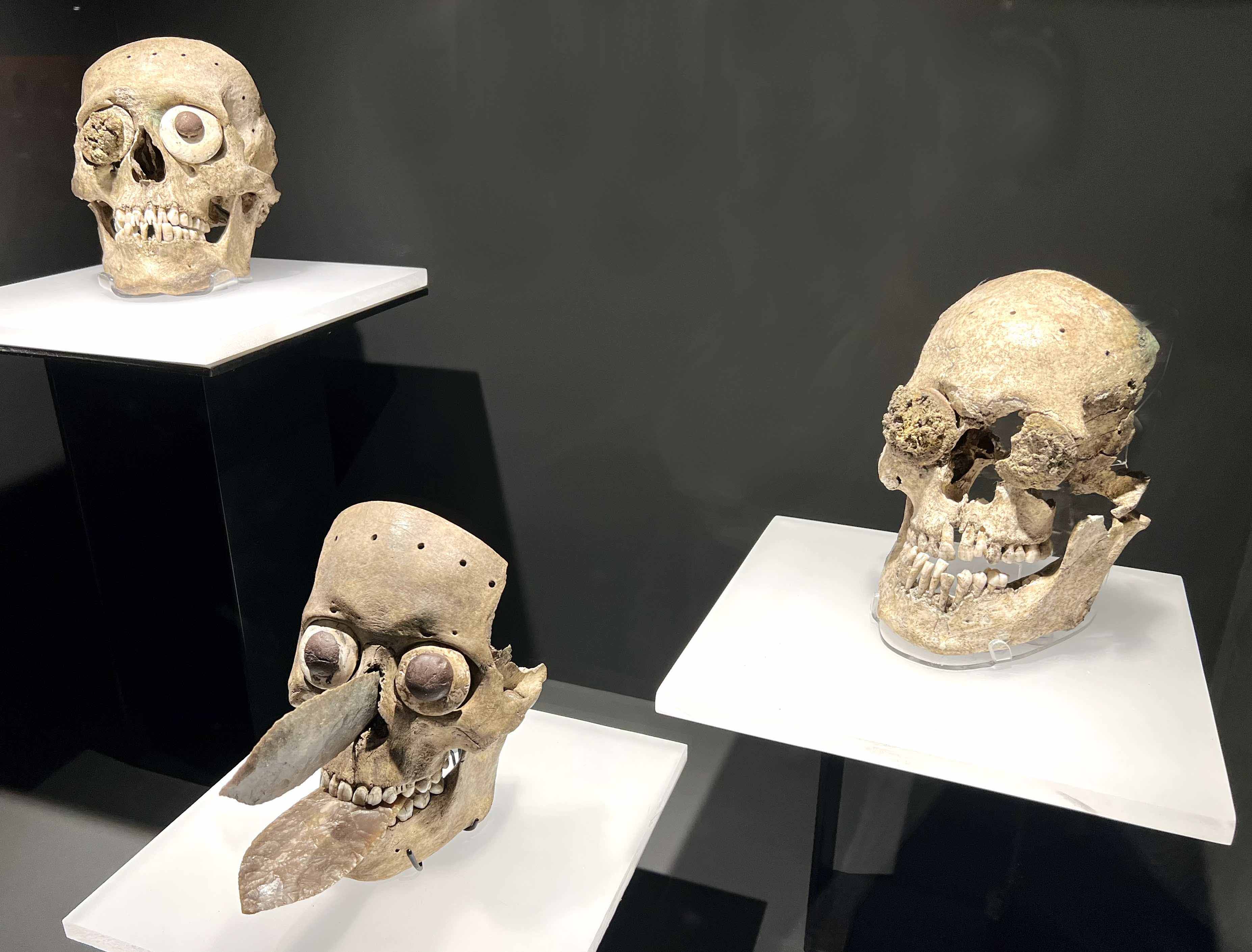
These are masks from various caches of offerings. They were created from the front part of the human cranium, which was then encrusted with disks of shell and painted inside the ocular orifices, according to the museum signage. Nasal and oral openings sometimes have flint knives inserted in them. Small holes at the forehead locations suggest that human hair (or something approximating it) was inserted there. This supposition comes from the knowledge that divine forces of death and the underworld have an association with curly hair. Photograph by Stephanie Wood, Museo del Templo Mayor, Mexico City, 15 February 2023.

tzontecoma(tl), skull, https://nahuatl.wired-humanities.org/content/tzontecomatl
apan(tli), canal or waterway, https://nahuatl.wired-humanities.org/content/apantli
tzon(tli), head, https://nahuatl.wired-humanities.org/content/apantli
En el Canal del Cráneo
Stephanie Wood
"Reconstrucción histórica digital del Lienzo de Tlaxcala," UNAM. [New web address pending]
This manuscript can be reproduced for non-profit purposes, as long as the images are not mutilated, and with full citation and link to the source. Please also cite this Visual Lexicon of Aztec Hieroglyphs (see splash page for recommended citation format)..