xicalli (TK222v)
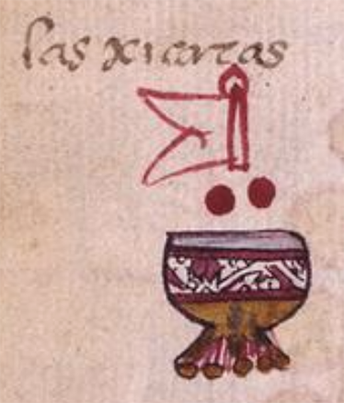
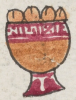
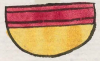
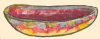
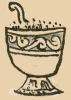
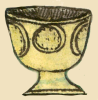
This painted simplex Nahuatl hieroglyph represents a decorated gourd cup (xicalli). The Spanish-language makes the identification clear by calling it a xicara (jícara in modern Spanish). The top is gray, then a black-lined band of red is below that, followed by a black and white pattern that seems to include at least one flower, then another black-outlined red band, and below that a cold base. The cup of bowl rests on some kind of stand or stem with red vertical lines and five or more small round balls that seem to be painted a gold color.
Stephanie Wood
This is another example of tributes in kind, which the town was protesting (while paying). This kind of vessel is quite elaborate, and it was probably destined for elite consumers. It would probably hold hot chocolate. The contextualizing image shows that forty such cups were to be submitted as a tribute payment. The number forty is shown in a notation that consists of a tecpantli flag (20) with two dots (the multipliers) below it.
Stephanie Wood
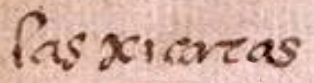
las xicaras
la jícaras
Stephanie Wood
c. 1556
Jeff Haskett-Wood
jícaras, tazas, vasos, cuencos, trastes, cuarenta, bandera, tributo, tributos, resistencia, colonialismo
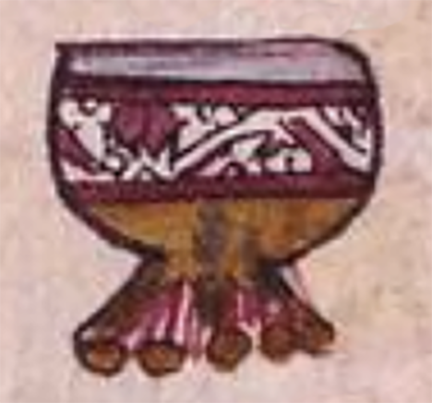
xical(li), gourd vessel, cup, bowl, https://nahuatl.wired-humanities.org/content/xicalli
la jícara
Stephanie Wood
The Codex Kingsborough, also known as the Códice de Tepetlaoztoc, and the Memorial de los indios de Tepetlaoztoc, is not on display. It was transferred from the British Library and is now held by the British Museum. It is shared on line at: https://www.britishmuseum.org/collection/object/E_Am2006-Drg-13964
©The Trustees of the British Museum. Shared under a Creative Commons Attribution-Non-Commercial-ShareAlike 4.0 International (CC BY-NC-SA 4.0) license. Please also cite the <em>Visual Lexicon of Aztec Hieroglyphsem>, ed. Stephanie Wood (Eugene, Ore.: Wired Humanities Projects, 2020-present) and this URL.