Tecpan (Mdz5v)
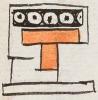
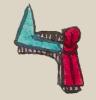
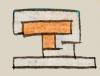
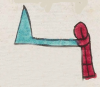
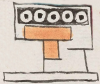
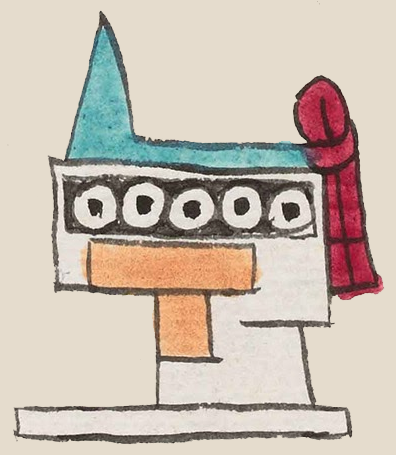
This compound glyph for the place name Tecpan, includes a building with small, concentric black and white circles that indicate it is a palace. It also includes a turquoise-colored diadem (with a red, possibly leather, tie) of the type worn by a high noble male, or lord (teuctli or tecuhtli), which also makes it clear that this is a palace. The building is a standard calli in the way it is shown in a profile view (in this case, facing the viewer's left), with its t-shaped wooden beams supporting the entrance. But is is a special type of building, and cal- does not figure in the phonetic reading, if we go by the gloss. The word tecpan has a built-in locative suffix of sorts (-pan, in or on), and the building would provide a semantic locative, too.
Stephanie Wood
The diadem (called a xiuhhuitzolli) is the usual glyph for the title teuctl or tecuhtli. Gordon Whittaker (Deciphering Aztec Hieroglyphs, 2021, 79) notes that the diadem provides support the reading of the building as a tecpan, and therefore it is a "semantic indicator."
Stephanie Wood
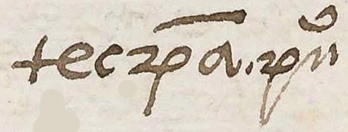
tecpā.puo
Tecpan, pueblo
Stephanie Wood
c. 1541, or by 1553 at the latest
Stephanie Wood
lords, palaces, diadems, teuctli, palacios, diademas, señores, nombres de lugares
tecpan, palace, https://nahuatl.wired-humanities.org/content/tecpan
teuc(tli), lord, https://nahuatl.wired-humanities.org/content/teuctli
-pan (locative suffix), in or on, https://nahuatl.wired-humanities.org/content/pan
TECTECPAN
Codex Mendoza, folio 5 verso, https://digital.bodleian.ox.ac.uk/objects/2fea788e-2aa2-4f08-b6d9-648c00..., image 21 of 188.
The Bodleian Libraries, University of Oxford, hold the original manuscript, the MS. Arch. Selden. A. 1. This image is published here under the UK Creative Commons, “Attribution-NonCommercial-ShareAlike 3.0 License” (CC-BY-NC-SA 3.0).