amatl (FCbk8f37v)
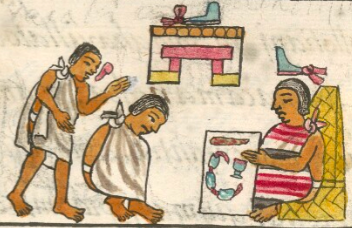
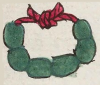
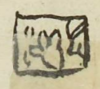
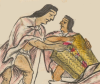
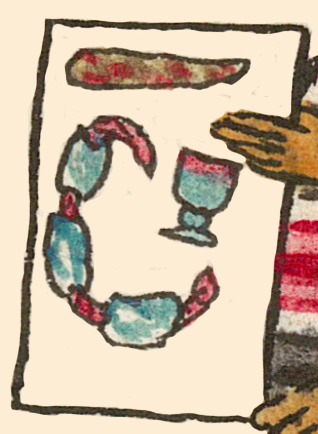
This iconographic example, featuring a piece of paper (amatl) with a painting of some stolen items, is included in this digital collection for the purpose of making potential comparisons with related hieroglyphs. The term selected for this example comes from the keywords chosen by the keywording team behind the Digital Florentine Codex. There is no gloss. This example shows a piece of paper that has a painting (tlacuilolli) of a bead necklace (cozcatl) that has turquoise or green stone (chalchihuitl) beads strung on a red tie. The painting also includes a cup (tecomatl) with a stem. The cup is mostly painted turquoise blue, but the top rim is red. A horizontal multi-colored object that is indecipherable appears at the top of the page. Apparently, these were all objects that were stolen by the man shown in the contextualizing image. The thief (ichtequini or ichtecqui) sits facing the paper, which is held upright by another person whose colorful clothing is just barely visible to the right of the paper in this iconographic image. The setting of the contextualizing image is a courtroom (teccalli). The fact that this is a court record of a crime makes amatl, in this case, a document.
Stephanie Wood
Incluimos en nuestra colección digital este ejemplo iconográfico, que nos muestra una hoja de papel (amatl) con las pinturas de algunos objetos robados, para poder compararlo con otros jeroglifos relacionados. El término seleccionado para este ejemplo proviene de las palabras clave elegidas por el equipo de editores del Códice Florentino Digital y no cuenta con una glosa. En la imagen vemos los bordes de una persona que sostiene el papel con la pintura (tlacuilolli) de un collar (cozcatl) de cuentas de turquesa o jadeita (chalchihuitl) ensartadas en un cordón rojo. La pintura también muestra un cáliz o copa (tecomatl) con un tallo. El recipiente está pintado casi completamente de turquesa, pero su borde superior está pintado de rojo. En la parte superior de la hoja aparece un objeto horizontal multicolor indescifrable. Al parecer, se trata de objetos robados por el sujeto que aparece en la imagen contextual. El ladrón (ichtequini, ichtecqui) está sentado frente al papel, el cual se plasmó sin dobleces. El contexto es el de un tribunal (teccalli). En este caso, el hecho de que se trate del registro o transcripción del enjuiciamiento de un delito hace que amatl se interprete como “documento”.
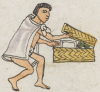
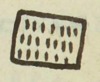
In the many examples of amatl that can be returned with a Quick Search of the term, this rectangular shape is rather typical. Often paper has markings on it that suggest alphabetic writing. Amatlacuilolli echoes the suggestions of writing in words. Examples of tlacuilolli are more likely to have simple images on them, often of flowers, or curving lines and squiggles. None of the papers in this collection have colorful paintings, such as this one. This collection does have examples of thieves and thievery. Often, the goods are in a woven hamper, and strings of beads, being highly prized, appear as objects stolen (to steal, ichtequi) on more than one occasion.
Stephanie Wood
La forma rectangular de este amatl es bastante típica, como puede verse en los muchos ejemplos que aparecen con una búsqueda rápida del término en nuestro Léxico. Es frecuente que el papel se plasme con marcas en su superficie que indican una escritura alfabética. Amatlacuilolli evoca el concepto de escribir con palabras, mientras que los ejemplos de tlacuilolli tienden a representar imágenes simples, normalmente de flores o líneas curvas y sinuosas. Excepto en el presente ejemplo, ninguna de las representaciones de hojas de papel de nuestra colección ilustra pinturas coloridas; aunque sí que contamos con ejemplos de ladrones y robos. Lo normal es que los objetos sustraídos aparezcan en un canasto tejido, mientras que las sartas de cuentas, al ser muy codiciadas, aparecen en más de una ocasión como objetos robados (ichtequi, robar).
1577
Jeff Haskett-Wood
pinturas, pintura, documentos, salas de audiencias, tribunal, tribunales, crimen, crímenes, ladrón, ladrones
ama(tl), paper, a document, https://nahuatl.wired-humanities.org/content/amatl
ichtecqui, thief, https://nahuatl.wired-humanities.org/content/ichtecqui
ichtequini, thief, https://nahuatl.wired-humanities.org/content/ichtequini
el documento
Stephanie Wood
Available at Digital Florentine Codex/Códice Florentino Digital, edited by Kim N. Richter and Alicia Maria Houtrouw, "Book 8: Kings and Lords", fol. 37v, Getty Research Institute, 2023. https://florentinecodex.getty.edu/en/book/8/folio/37v/images/0 Accessed 22 August 2025.
Images of the digitized Florentine Codex are made available under the following Creative Commons license: CC BY-NC-ND (Attribution-NonCommercial-NoDerivs 4.0 International). For print-publication quality photos, please contact the Biblioteca Medicea Laurenziana ([email protected]). The Library of Congress has also published this manuscript, using the images of the World Digital Library copy. “The Library of Congress is unaware of any copyright or other restrictions in the World Digital Library Collection. Absent any such restrictions, these materials are free to use and reuse.”