Macuiloc (Verg40r)
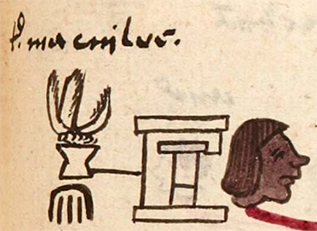
This compound Nahuatl hieroglyph plus a notation is a black-line drawing of the personal name Macuiloc (“The Fifth Pulque”), attested here as a man’s name. The compound shows a stemmed cup (probably a xicalli) with bubbles on top, making it likely a cup of pulque (octli), which provides the semantic reading of the -oc at the end of the name. The agave plant above the cup semantically complements and reinforces the reading of -ˆ. Below the cup are five short vertical lines with a connector across the top. This is an annotation for the number five (macuilli), which is the start to this personal name (Macuil-).
Stephanie Wood
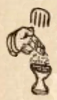
Teooctli or macuiloctli were beverages that played a role in welcome rites, according to Elena Mazzetto and Natalia Moragas, "Simbolismo y uso litúrgico de algunas variedades de octli entre los antiguos nahuas. Un primer acercamiento,"Revista de Estudos da Religião 15:1 (June 2015):3l.
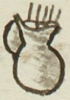
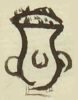
In this digital collection there is another Macuiloc hieroglyph for a man in Huexotzinco a couple of decades later, and in another region, where perhaps this religious rite was also known and performed.
Stephanie Wood

to. macuiloc.
Toribio Macuiloc
Stephanie Wood
1539
Jeff Haskett-Wood
men’s names, nombres de hombres, alcohol, números, cinco, five, agave
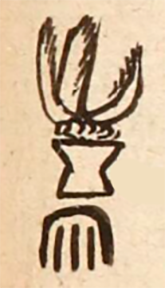
macuiloc(tli), the fifth cup of pulque, which intoxicates, https://nahuatl.wired-humanities.org/content/macuiloctli
macuil(li), five, https://nahuatl.wired-humanities.org/content/macuilli
oc(tli), pulque, https://nahuatl.wired-humanities.org/content/octli
posiblemente, El Quinto Pulque
Stephanie Wood
Available at Codex Vergara, folio 40r, https://gallica.bnf.fr/ark:/12148/btv1b84528032/f87.item.zoom, accessed 10 March 2026. The Vergara is associated with Tepetlaoztoc, in the larger region of Tetzcoco, c. 1539–1543. “Source gallica.bnf.fr / BnF.” We would also appreciate a citation to the Visual Lexicon of Aztec Hieroglyphs, https://aztecglyphs.wired-humanities.org/.
Image Rights: The non-commercial reuse of images from the Bibliothèque nationale de France is free as long as the user is in compliance with the legislation in force and provides the citation: “Source gallica.bnf.fr / Bibliothèque nationale de France” or “Source gallica.bnf.fr / BnF.” We would also appreciate a citation to the Visual Lexicon of Aztec Hieroglyphs, https://aztecglyphs.wired-humanities.org/