Tlatozcac (TK206v)
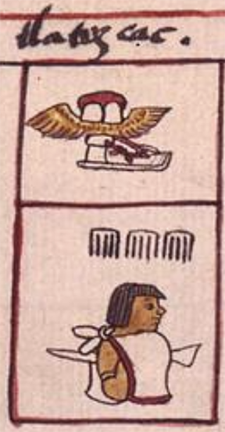
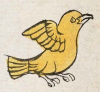
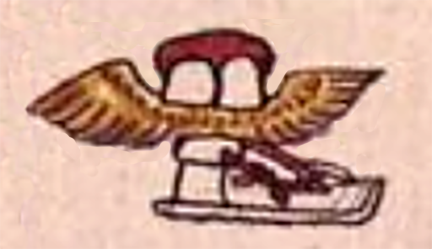
This painted compound Nahuatl hieroglyph represents the place name Tlatozcac (perhaps, “At the Throat of Something,” speaking of a land formation). The compound has three elements, and the reading order is downward. At the top is a frontal view of a pair of white teeth (tlantli) with red gums, which represents here the phonetic syllable -tla-, providing the start to the place name, Tla-. Moving down, the next element consists of a frontal view of a pair of yellow-ish wings spread wide. These are the wings of a toztli (yellow parrot), and they supply the phonetic syllable -toz- that appears in the middle of the place name. Finally, a sandal (cactli) at the bottom of the compound contributes the phonetic syllable -cac to the end of the name. The meaning of place name has nothing to do with teeth, wings, or sandals. Rather, the compound is fully phonographic.
Stephanie Wood
Raúl Macuil defines tlatozcac as “garganta del monte” or “cañón” (throat of the woods or canyon). This is apparently a case, like many others, where a body part is equated with a landscape feature. Other examples are acolli (shoulder for a bend or cove), tentli (lips for an edge or border), yacatl (nose for a point, peak, or a leader), nacaztli (ear for a side or corner), tzintli (rear end for lower or little), and maitl (hand or arm for land measurements). Tzontli (head or hair) can also have various other readings.
Side Note: The folio numbers are not always clear in the copy published online by the British Museum. Marc Thouvenot gives this page the number K04_B in his TLACHIA digital collection, https://tlachia.iib.unam.mx/tepetlaoztoc/K04_B.
Stephanie Wood
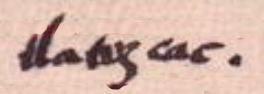
tlatozcac
Tlatozcac
Stephanie Wood
c. 1556
Jeff Haskett-Wood
gargantas, cañones, paisaje, loro, loros, huarache, huaraches, dientes, ala, alas, nombres de lugares, topónimo, topónimos, fonetismo
toz(tli), yellow-headed parrot,, https://nahuatl.wired-humanities.org/content/toztli
tozcac, throat, https://nahuatl.wired-humanities.org/content/tozcac
tla-, indefinite prefix, https://nahuatl.wired-humanities.org/content/tla
posiblemente, Garganta del Monte o Cañón
Raúl Macuil
The Codex Kingsborough, also known as the Códice de Tepetlaoztoc, and the Memorial de los indios de Tepetlaoztoc, is not on display. It was transferred from the British Library and is now held by the British Museum. It is shared on line at: https://www.britishmuseum.org/collection/object/E_Am2006-Drg-13964
©The Trustees of the British Museum. Shared under a Creative Commons Attribution-Non-Commercial-ShareAlike 4.0 International (CC BY-NC-SA 4.0) license. Please also cite the <em>Visual Lexicon of Aztec Hieroglyphsem>, ed. Stephanie Wood (Eugene, Ore.: Wired Humanities Projects, 2020-present) and this URL.