xicalli (Mdz68r)
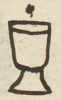
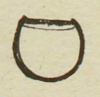
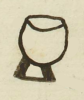
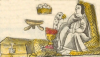
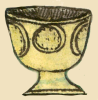
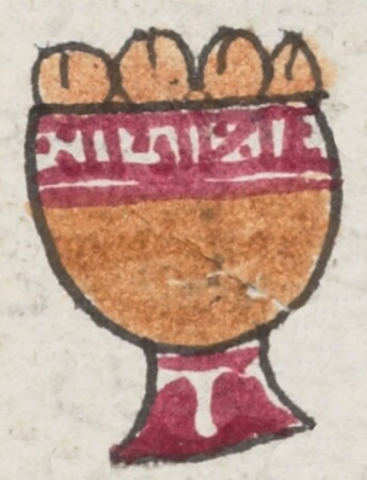
This example of iconography features a frontal view of a ceramic cup (perhaps a xicalli) for the chocolate beverage (according to the gloss--see below). Four cacao beans stick up at the top of the cup, alluding to the contents. Red and white designs appear on a horizontal band on the upper part of the cup and on the stem at the bottom. Otherwise, the cup is a terracotta color, suggesting it is made of local clay, and the xicalli was usually made from a gourd.
Stephanie Wood
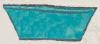
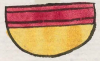
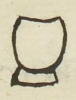
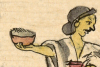
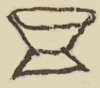
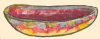
Chocolate was consumed by members of the social hierarchy. The design of the cup suggests this, too. The tecomatl was another vessel for drinking hot chocolate. So this cup may actually be a tecomatl. Most xicalli vessels were made from gourds. The question is whether a stemmed cup could be a gourd. These days, round gourd vessels sit on a woven ring (yahualli). But a few xicalli examples below, not just iconographic examples but hieroglyphic examples, do have stems. The term xicalli entered Spanish as jícara. Xical was occasionally given as a personal name--perhaps when a baby had a round belly--?
Stephanie Wood

xicara cō cacao
pa bever
jícara con cacao para beber
Stephanie Wood
c. 1541, or by 1553 at the latest
Stephanie Wood
cups, containers, vessels, jícaras, bowls, tazas, tazones, cuencos
xical(li), a gourd vessel, container, cup, https://nahuatl.wired-humanities.org/content/xicalli
la jícara
Stephanie Wood
Codex Mendoza, folio 68 recto, https://digital.bodleian.ox.ac.uk/objects/2fea788e-2aa2-4f08-b6d9-648c00..., Image 146 of 188.
Original manuscript is held by the Bodleian Libraries, University of Oxford, MS. Arch. Selden. A. 1; used here with the UK Creative Commons, “Attribution-NonCommercial-ShareAlike 3.0 License” (CC-BY-NC-SA 3.0)