Calli (Verg25r)
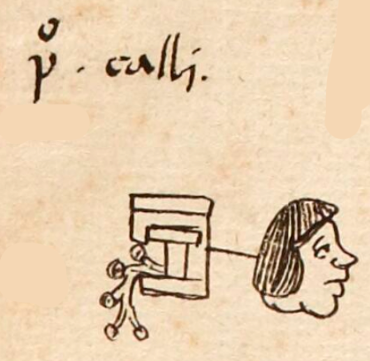
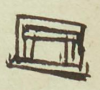
This compound Nahuatl hieroglyph is a black-line drawing of the personal name Calli (“House” or “Building”), attested here as a man’s name. It includes the sign for “house” in a profile view facing left. Water spurts out of the entryway and down to the left, with five droplets splashing off the little stream. There is little room for lines of current in the water, but the curving cascade suggests movement. The water (atl) has no semantic role, it is just a phonetic complement, making it clear that the word calli includes the sound of the vowel “a.”
Stephanie Wood
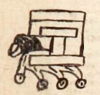
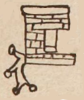
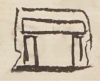
This calli sign is classic, with its T-shaped beams at the entrance. Another Calli name in this manuscript emphasizes adobe bricks, but this one is smooth. The lack of a numerical companion for this calendrical day sign may suggest an intentional disguise. If this manuscript is as early as many believe, it would probably not be likely that this was a case of forgetting the iconography.
Stephanie Wood
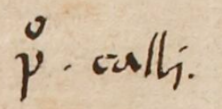
po. calli.
Pedro Calli
Stephanie Wood
1539
Jeff Haskett-Wood
casas, arquitectura, agua, fonetismo, nombres de hombres, men’s names
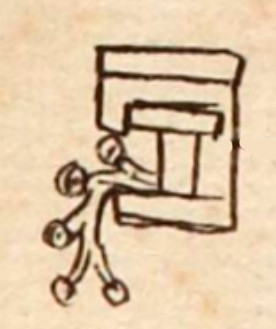
cal(li), house or building, https://nahuatl.wired-humanities.org/content/calli
a(tl), water, https://nahuatl.wired-humanities.org/content/atl
“Casa” o “Edificio”
Stephanie Wood
Available at Codex Vergara, folio 25r, https://gallica.bnf.fr/ark:/12148/btv1b84528032/f57.item.zoom, accessed 22 February 2026. The Vergara is associated with Tepetlaoztoc, in the larger region of Tetzcoco, c. 1539–1543.
The non-commercial reuse of images from the Bibliothèque nationale de France is free as long as the user is in compliance with the legislation in force and provides the citation: “Source gallica.bnf.fr / Bibliothèque nationale de France” or “Source gallica.bnf.fr / BnF.” We would also appreciate a citation to the Visual Lexicon of Aztec Hieroglyphs, https://aztecglyphs.wired-humanities.org/.