cuauhcalli (FCbk8f39v)
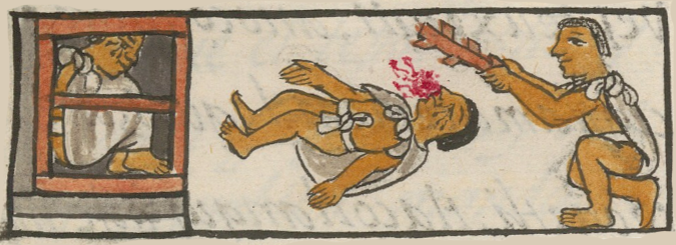
This iconographic example featuring a wooden cage (cuauhcalli) is included in this digital collection for the purpose of making potential comparisons with related hieroglyphs. The term selected for this example comes from the keywords chosen by the team behind the Digital Florentine Codex and is supported by the mention in the text of cuauhcalco. This example shows a cage that is just barely large enough to enclose a man while seated with his knees up. The man in question wears a cloak with folds and shadows (a three-dimensionality that came from European artistic influences). He has tears running down his visible cheek. From the context, one learns that this is a musician, perhaps a singer (cuicani), who did not perform properly before the lord, and so he was jailed and later killed. The execution must be what appears in the contextualizing image. In that case, the man is being beaten with a hefty piece of wood (cuahuitl), and blood (eztli) is spraying from his mouth.
Stephanie Wood
Incluimos en nuestra colección digital este ejemplo iconográfico de una jaula de madera (cuauhcalli) para poder compararlo con otros jeroglíficos relacionados. El término seleccionado para este ejemplo proviene de las palabras clave elegidas por el equipo de coordinación del Códice Florentino Digital y lo respalda la mención de cuauhcalco en el texto. Se nos muestra una jaula que a duras penas puede contener a un hombre sentado con las rodillas contra su pecho, quien está vestido con una tilma con pliegues y sombreado (un efecto artístico de tridimensionalidad importado de Europa). Un chorro de lágrimas rueda por la única mejilla visible. El contexto nos indica que se trata de un músico o quizá un cantante (cuicani) que no se desempeñó bien frente a su señor y fue por ello encarcelado y luego ejecutado. Su muerte es probablemente lo que aparece en la imagen contextual: una víctima que escupe sangre (eztli) al ser apaleada con un grueso leño (cuahuitl).
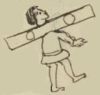
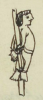
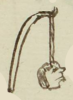
What may be examples of other punishments, some also severe, appear below. The men next to the wall had been whipped on the wall. There are also examples of strangulation, being tied to a pole, having one’s hands bound, being put in stocks, and being hanged. But the titles of those records, in the upper case, refer to hieroglyphs of personal names, not actual historical events, so this should be taken into consideration. Another very bloody execution is found in what we labeled tlacamictia.
A larger but similar cage for a human being appears in a scene in the Códice Durán that is part of a vignette published by Marc Thouvenot: https://vignettes.sup-infor.com/imagen/DU_02_304r_a.
Stephanie Wood
Véanse más abajo otros posibles ejemplos de castigos a cuál más severo: hombres yacientes azotados junto a un muro, un dignatario estrangulado, un pobre diablo atado a un poste, manos atadas, víctimas en cepos y hasta ahorcados. Pero debemos tomar en cuenta que los títulos de estas entradas están escritos con mayúscula inicial: se refieren a jeroglíficos de nombres propios y no a hechos históricos verificados. Hemos también etiquetado una ejecución muy sangrienta con el término tlacamictia.
Una jaula para contener personas más grande pero similar a la del presente ejemplo aparece en una escena del Códice Durán que es parte de una viñeta publicada por Marc Thouvenot: véase https://vignettes.sup-infor.com/imagen/DU_02_304r_a.
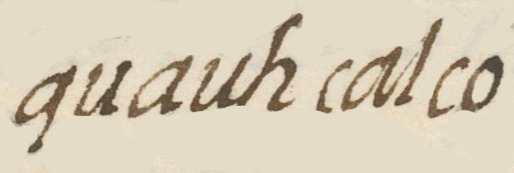
quauhcalco
cuauhcalco
Stephanie Wood
1577
Jeff Haskett-Wood
crimen, castigo, castigos, músicos, lágrimas, llorar, emoción, madera
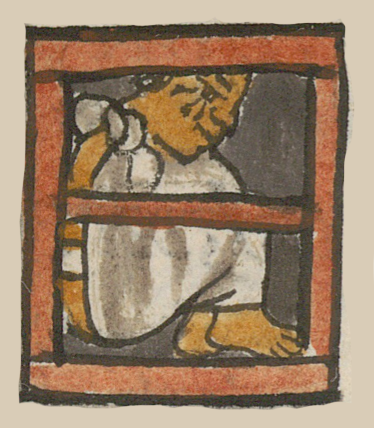
cuauhcal(li), wooden cage, https://nahuatl.wired-humanities.org/content/cuauhcalli
la jaula de madera
Stephanie Wood
Available at Digital Florentine Codex/Códice Florentino Digital, edited by Kim N. Richter and Alicia Maria Houtrouw, "Book 8: Kings and Lords", fol. 39v, Getty Research Institute, 2023. https://florentinecodex.getty.edu/en/book/8/folio/39v/images/0 Accessed 23 August 2025.
Images of the digitized Florentine Codex are made available under the following Creative Commons license: CC BY-NC-ND (Attribution-NonCommercial-NoDerivs 4.0 International). For print-publication quality photos, please contact the Biblioteca Medicea Laurenziana ([email protected]). The Library of Congress has also published this manuscript, using the images of the World Digital Library copy. “The Library of Congress is unaware of any copyright or other restrictions in the World Digital Library Collection. Absent any such restrictions, these materials are free to use and reuse.”